How InvestLab's Strategies Performed in September + Their Exact Weights for October
By Stephane Renevier
Our framework at InvestLab is simple. Start with a robust core portfolio that holds up in any economy, even a stock bear market. Add tactical strategies that cut risk when danger builds and seize opportunities when they appear. Keep the exciting stuff - AI, single stocks, thematic bets - as small satellites.
What happened in September?
September was a good reminder that the usual “safe” assets don’t always feel very safe.
It started when the Fed raised rates for the first time since 2023 and suggested it might not be done. Then tensions between the US and Iran pushed oil above $100, adding another inflation worry just as markets were hoping rate cuts might be getting closer.
Put the two together, and investors suddenly had to rethink how long rates might stay high. The 10-year Treasury yield jumped about half a percentage point to 5.3%.
That hit bonds and gold hard. But the two defensive assets that actually worked were commodities and the US dollar - exactly what Adaptive Hedge was holding. So its first live test for our hedging strategy was a good one.
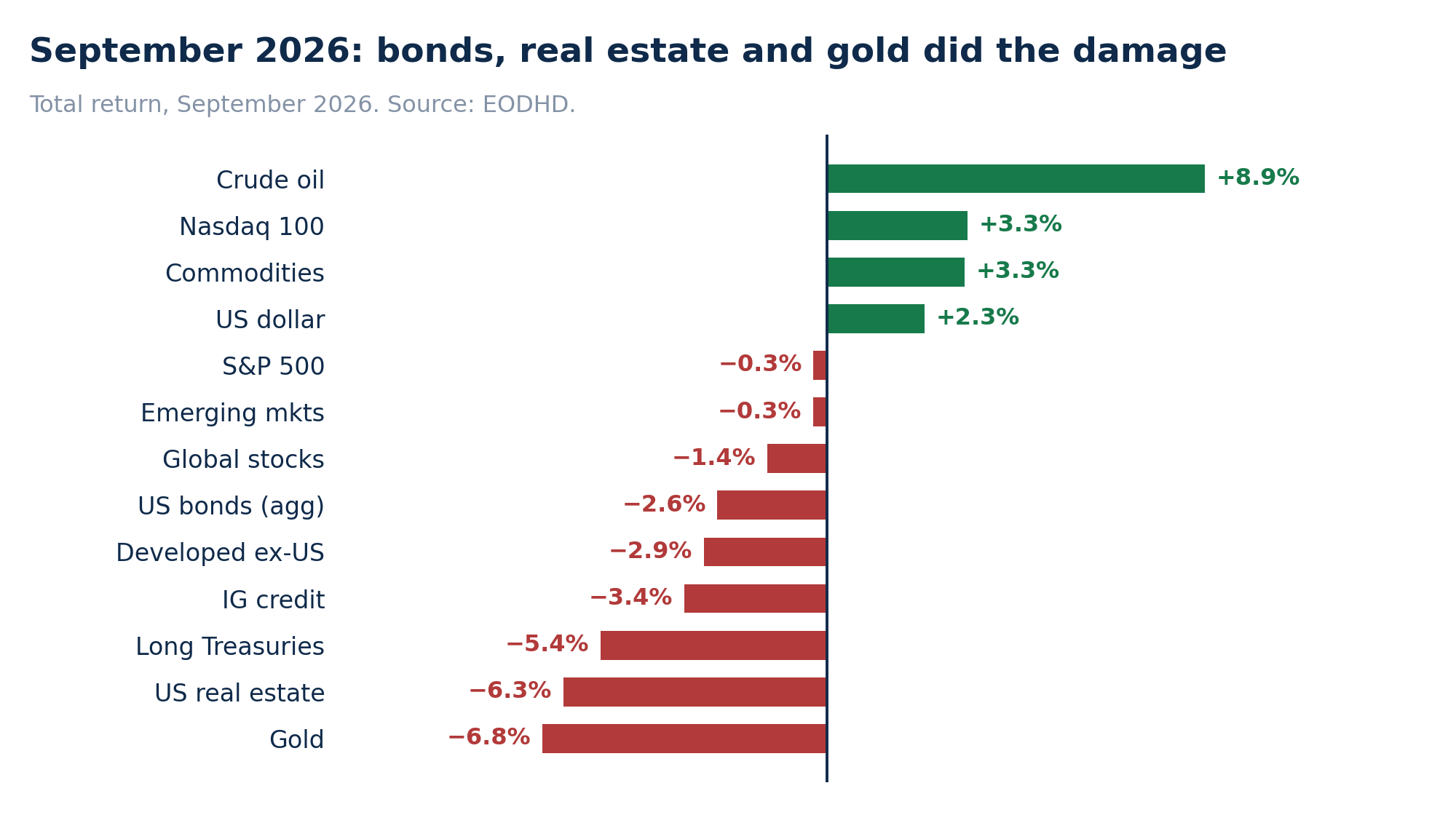 Figure 1. Total returns by asset class, September 2026. Source: EODHD.
But while Adaptive Hedge gained 2.8%, the other two strategies had a harder month: All-Weather, the biggest bond holder, lost 3.9%, and Pivot5, which held gold, lost 1.5%.
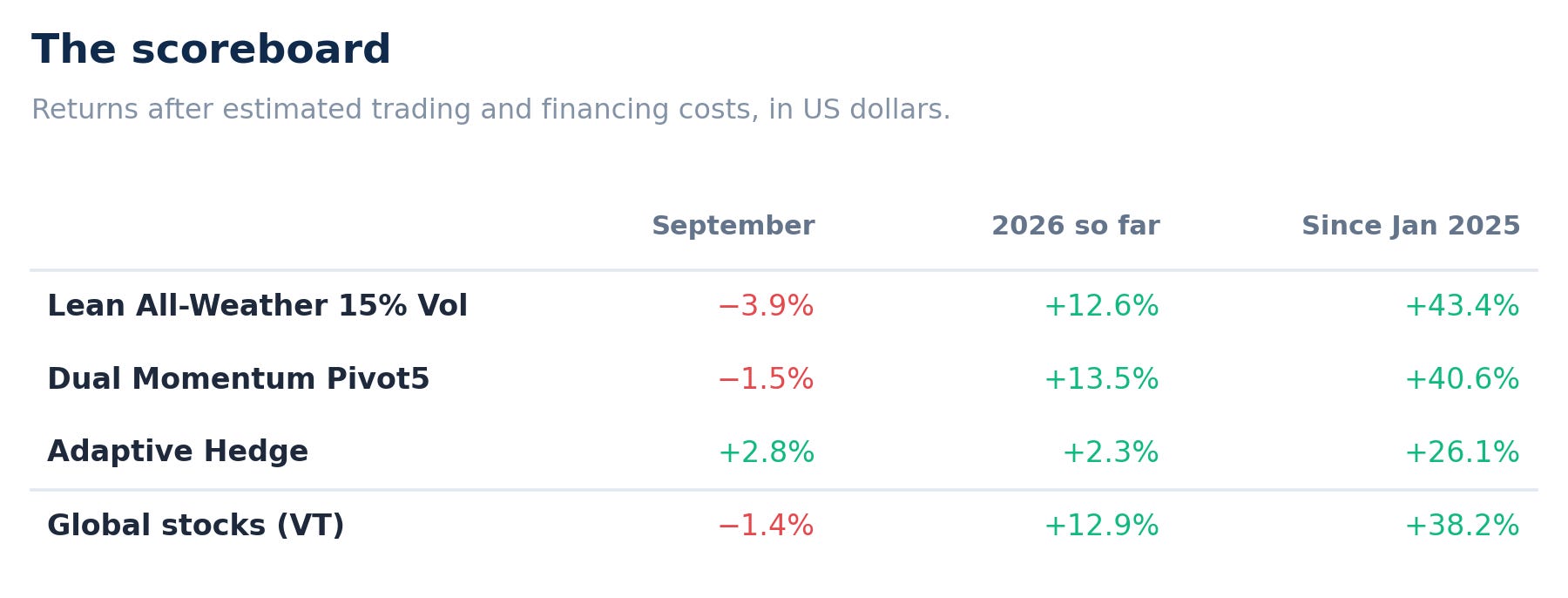 Figure 2. The scoreboard: September, 2026 so far and since January 2025, after estimated costs.
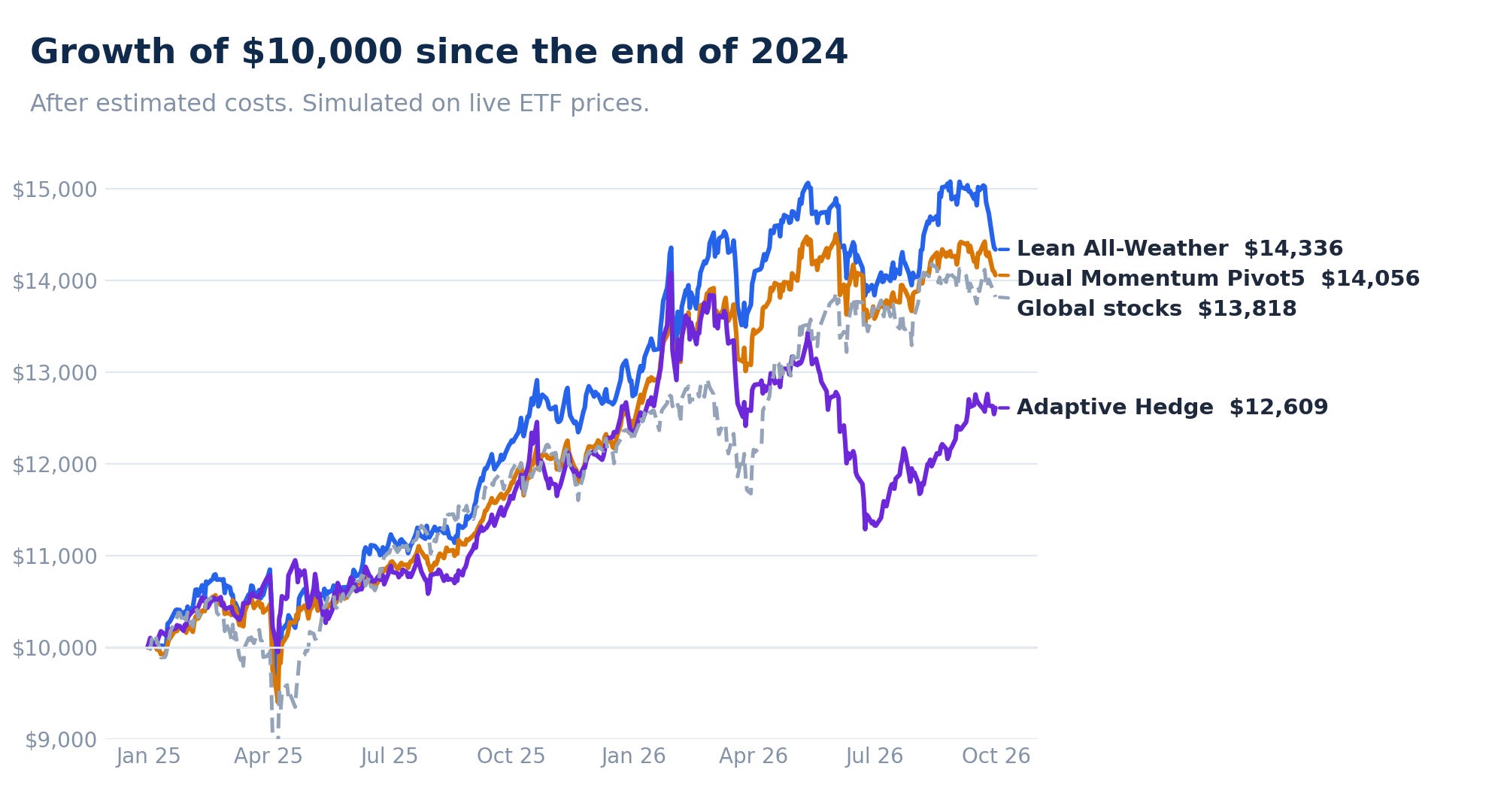 Figure 3. Growth of $10,000 since the end of 2024, after estimated costs.
CORE PORTFOLIO
Leveraged Lean All-Weather: −3.9% in September, +12.6% this year and +43.4% since 2025
All-Weather lost 3.9% in September, against 1.4% for global stocks. It was its second-worst month since we began tracking it in January 2025.
The problem was pretty straightforward: three of its four building blocks were hurt by rising rates. Commodities added 1.2 points, but this was not enough to offset the rest.
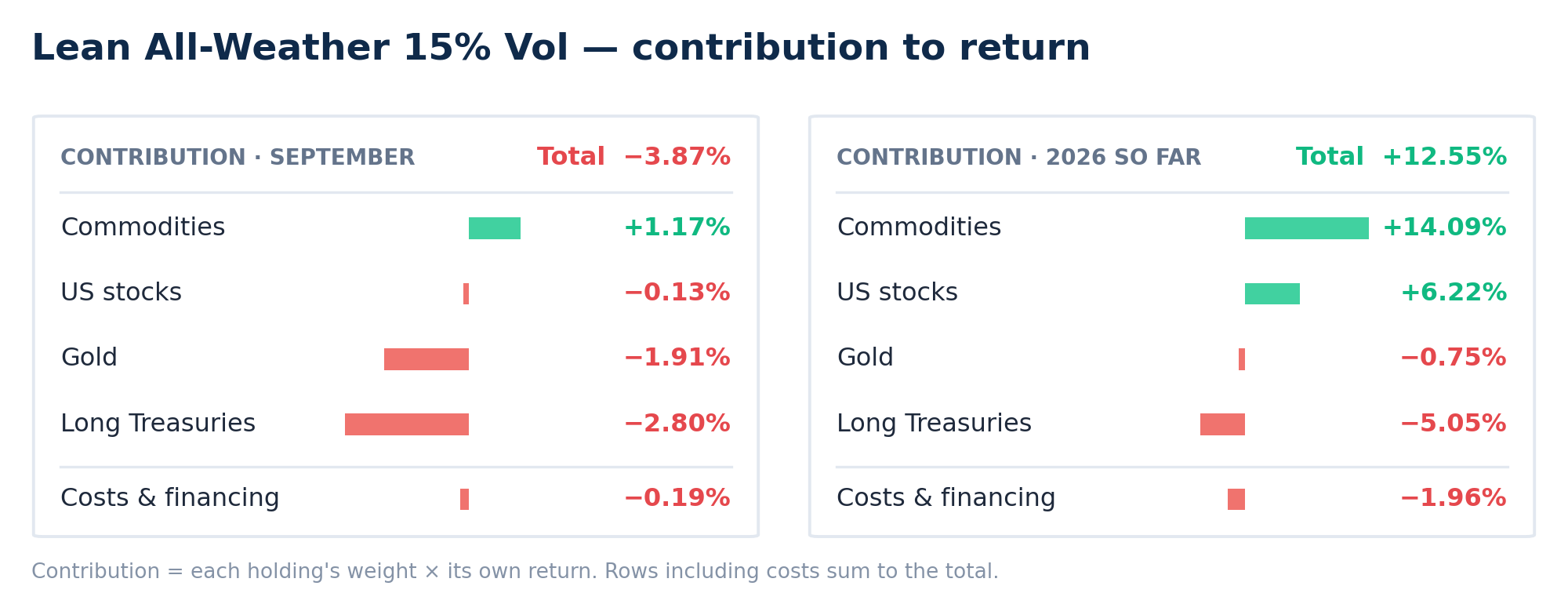 Figure 4. Lean All-Weather: contribution to return, September and 2026 so far.
We know that this is All-Weather’s weak spot. It is built to handle very different economic environments, because different assets tend to do well in different regimes. But when interest rates jump suddenly, stocks, bonds and gold can all fall together — and leverage makes the move hurt more.
The good news is that this usually doesn’t last for long. Once markets reprice to the new rate level, those assets tend to go back to responding to different economic forces. Case in point: Since 1990, all three have fallen together in roughly one month out of ten, and never for more than two months in a row. 2022 was the big exception.
Zoom out, though, and the reason for holding commodities becomes clear. Bonds and gold are not enough when inflation is the problem.
All-Weather is still up 12.6% in 2026, almost level with global stocks at 12.9%. Commodities contributed 14.1 percentage points; without them, the portfolio would be down around 1.5%. That is really the point of the portfolio: you do not need every asset to work. You need at least one to work when the others do not.
How it’s positioned for October: more Treasuries, fewer commodities
It’s quarter-end, so we rebalance. Two things matter here.
First, the portfolio sizes each asset based on how much risk it contributes. If something becomes more volatile - or more correlated to the rest of the portfolio - we need less of it. If it becomes calmer, we can hold more.
Second, prices move between rebalances. So even if the targets stayed exactly the same, the actual weights would drift away from them.
This quarter, both effects point in the same direction: more bonds, fewer commodities. The chart below shows the full before-and-after.
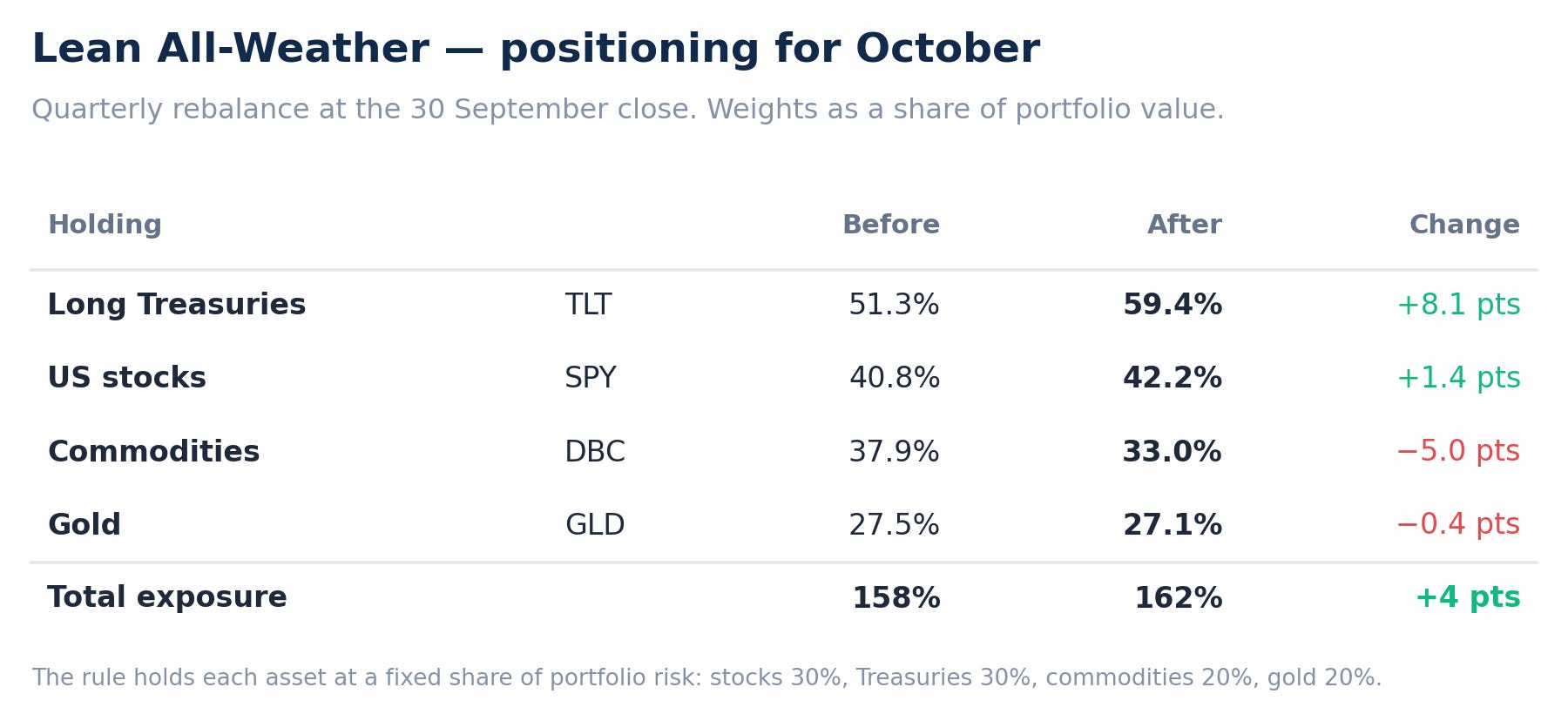 Figure 5. Lean All-Weather: weights before and after the 30 September rebalance.
And here is the live strategy, updated daily:
TACTICAL STRATEGY
Dual Momentum Pivot5: −1.5% in September, +13.5% this year and +40.6% since 2025
Pivot5 lost 1.5% in September, almost exactly in line with global stocks. Gold was basically the whole story. The other four holdings roughly cancelled each other out, while gold alone cost the strategy 1.35 percentage points. It is now the only Pivot5 holding that has lost money this year.
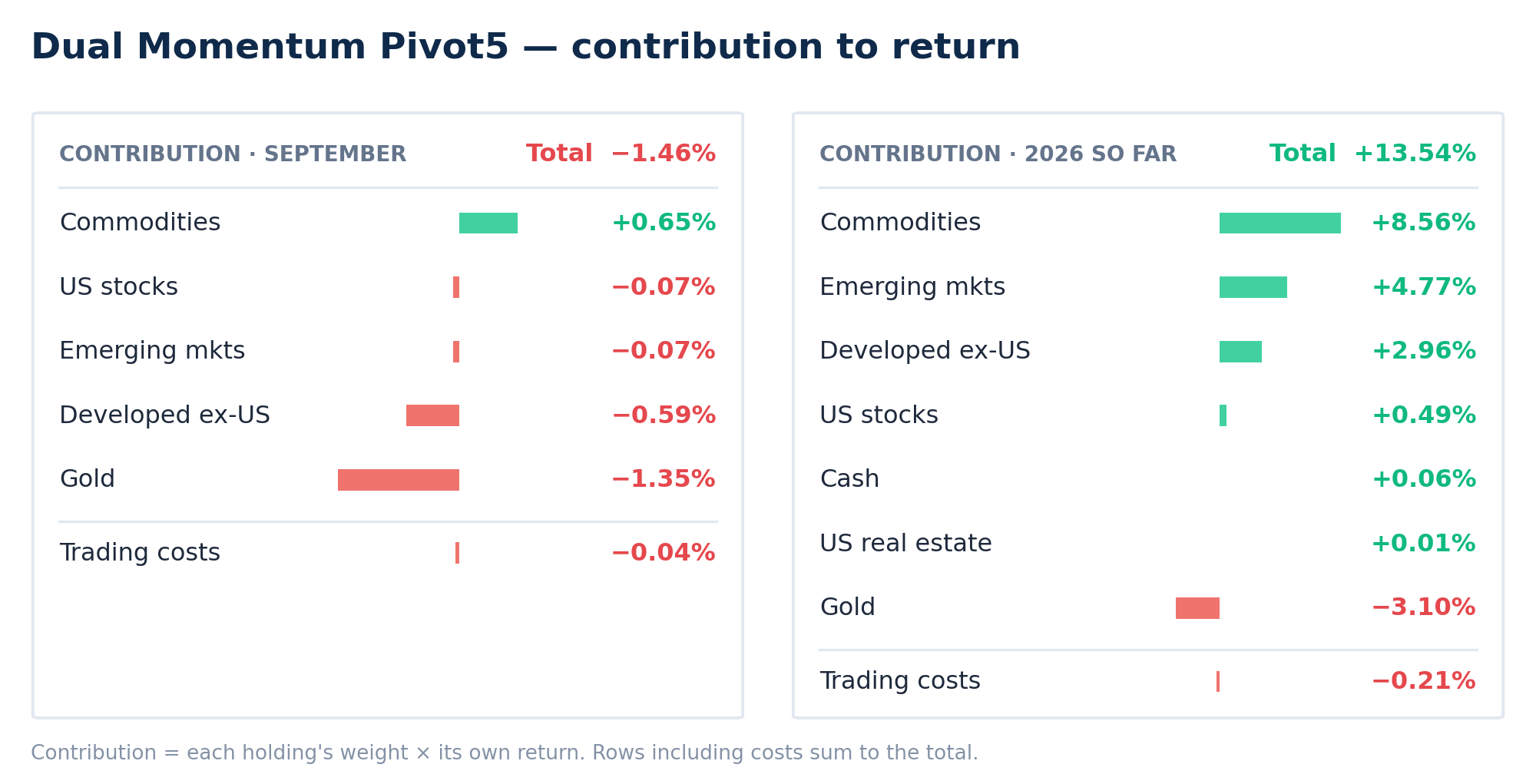 Figure 6. Dual Momentum Pivot5: contribution to return, September and 2026 so far.
It is the second time in three months that gold has wrong-footed the strategy: sold in June, it rebounded 11%; bought back in August, it fell 6.8%. That is momentum’s weak spot we highlighted in the deep dive: when there is no clean trend, the strategy can get whipsawed.
Still, the rule did more good than harm. Eight of the nine assets Pivot5 can own fell in September. If you had simply held all nine equally, you would have lost 2.6%. Pivot5 lost 1.5%, mainly because it avoided bonds and real estate. The same is true over the year so far. Holding all nine assets equally would have returned 8.9%. Pivot5 returned 13.5%.
Since January 2025, Pivot5 is up 40.6%, versus 38.2% for global stocks, with a shallower worst drawdown (−11.0% against −16.5%).
How it’s positioned for October: gold out, real estate back in
One change, and it reverses last month’s: real estate replaces gold.
Gold now fails the trend test: it is down over three of the five periods the strategy checks. Real estate passes, but only just. It is up over 6, 9 and 12 months and down over the last one and three.
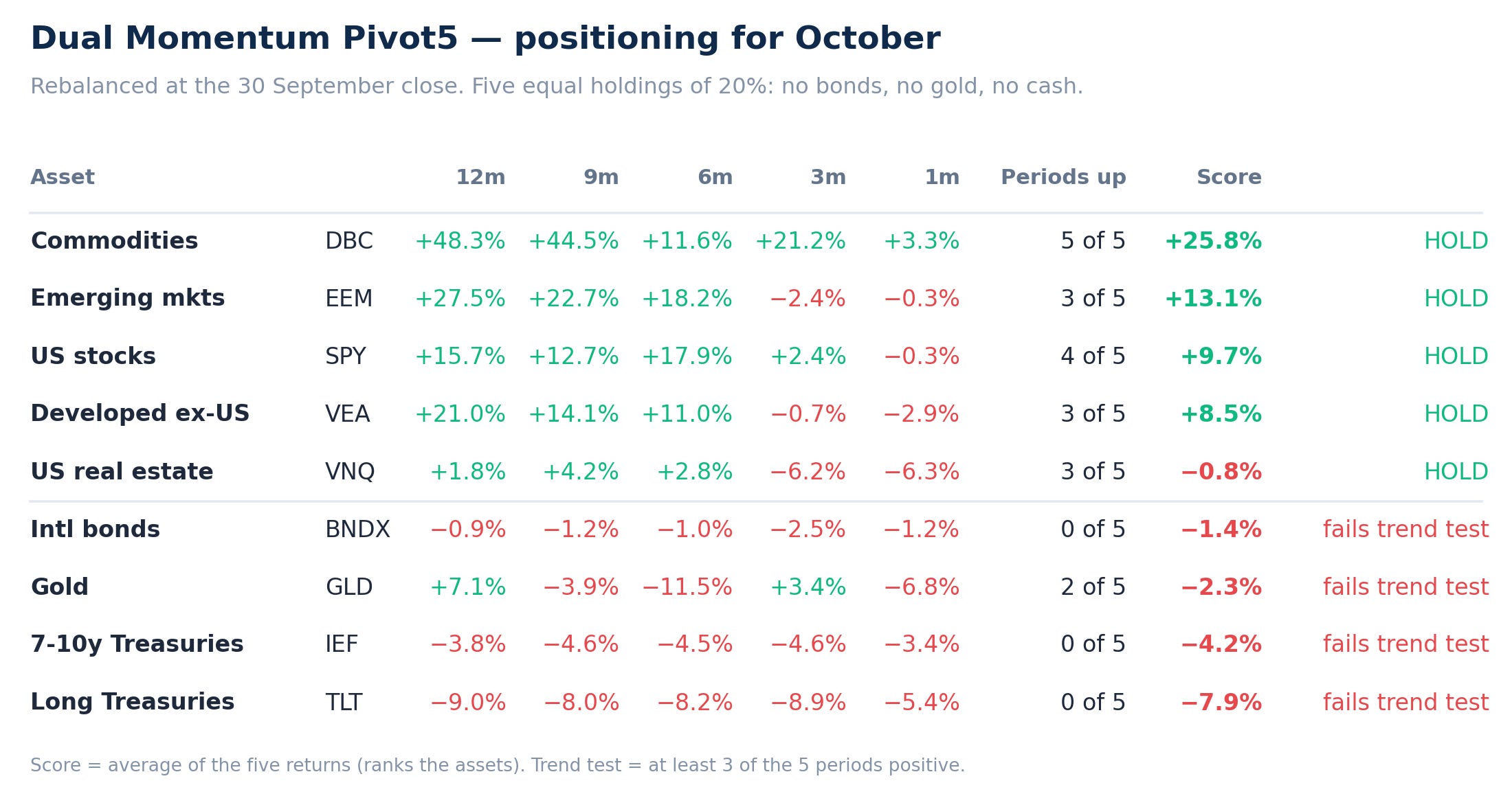 Figure 7. Dual Momentum Pivot5: the trend test for all nine assets at 30 September.
And here is the live strategy, updated daily:
DEFENSIVE STRATEGY
Adaptive Hedge: +2.8% in September, +2.3% this year and +26.1% since 2025
Adaptive Hedge gained 2.8% in September, while global stocks lost 1.4%.
It has held commodities and the US dollar since the end of June. Both rose: commodities added 1.6 points and the dollar 1.2.
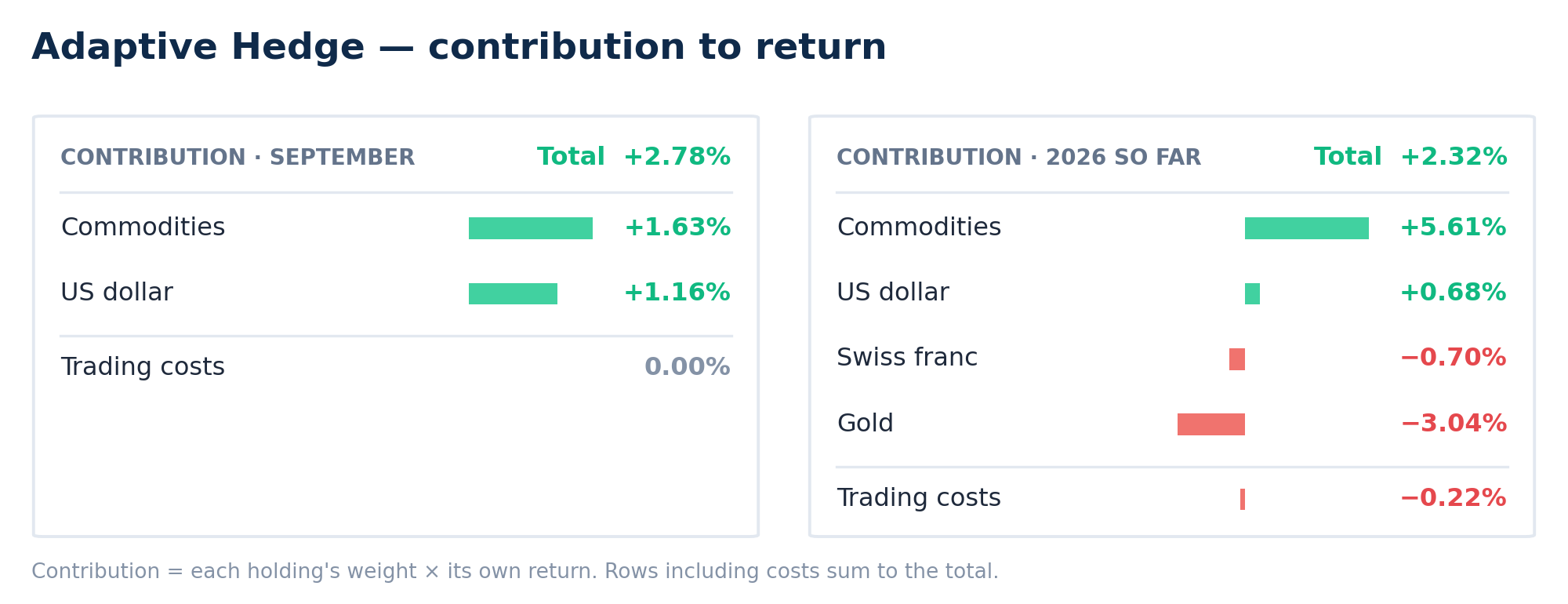 Figure 8. Adaptive Hedge: contribution to return, September and 2026 so far.
Now, that does not mean it will always be in the right place. What September does show is the mechanism at work: the defensive asset that helps depends on what is causing the trouble, and the rule moves to whichever one is working.
How it’s positioned for October: no change
Commodities and the US dollar, half each. They are the only two of the six assets passing the trend test.
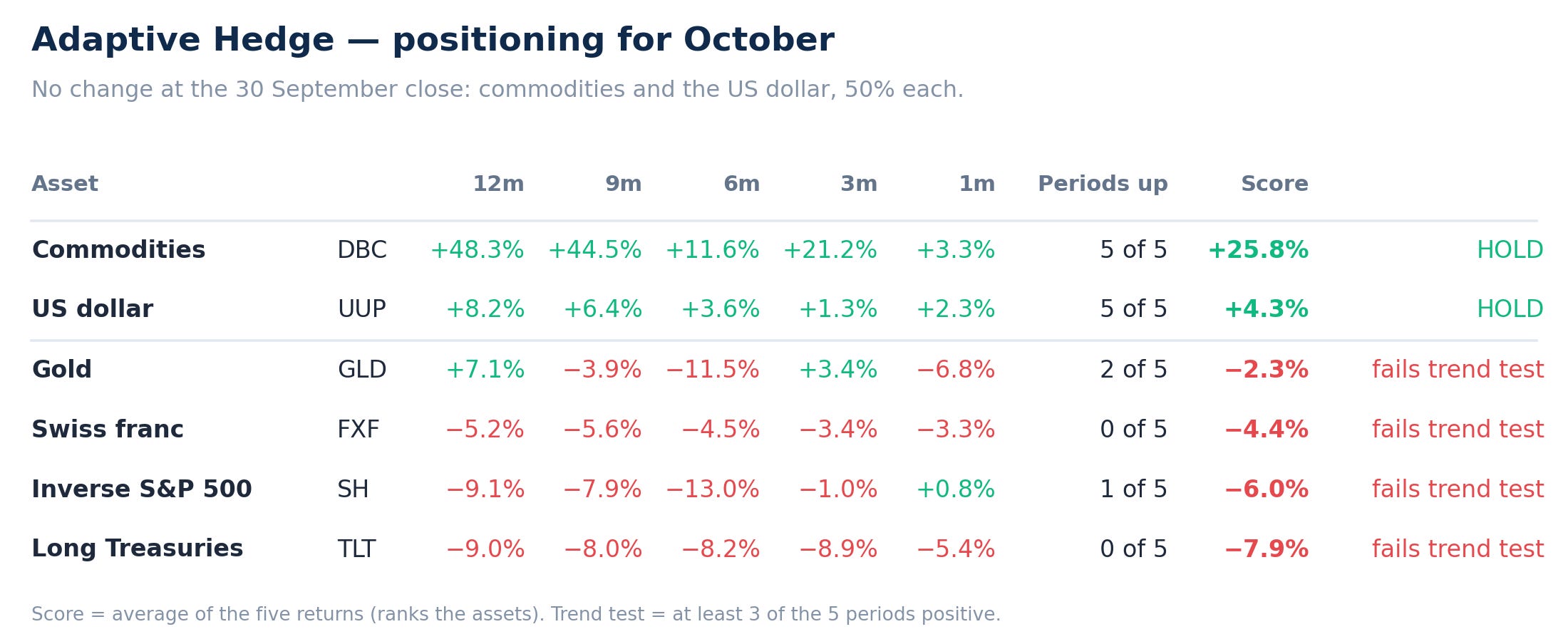 Figure 9. Adaptive Hedge: the trend test for all six assets at 30 September.
One thing to know: both holdings protect against inflation and rate hikes. If stocks fall because the economy weakens, commodities may well fall too, and the rule would need a month or two to switch.
And here is the live strategy, updated daily:
Follow all three strategies live
For advisers, wealth managers and family offices: we also run firm pilots with model portfolios, client-ready reporting and the full backtesting toolkit. Get in touch to set one up.
Past performance is not a guide to future returns. Returns are simulated on live ETF prices and net of modelled trading and financing costs; they are not an audited track record. Figures before 2025, including the 1990 history, are backtested and hypothetical. This is general information, not personal investment advice.
For information and education only — nothing here is investment advice. Backtested and live results are shown with their assumptions; past performance does not guarantee future returns.